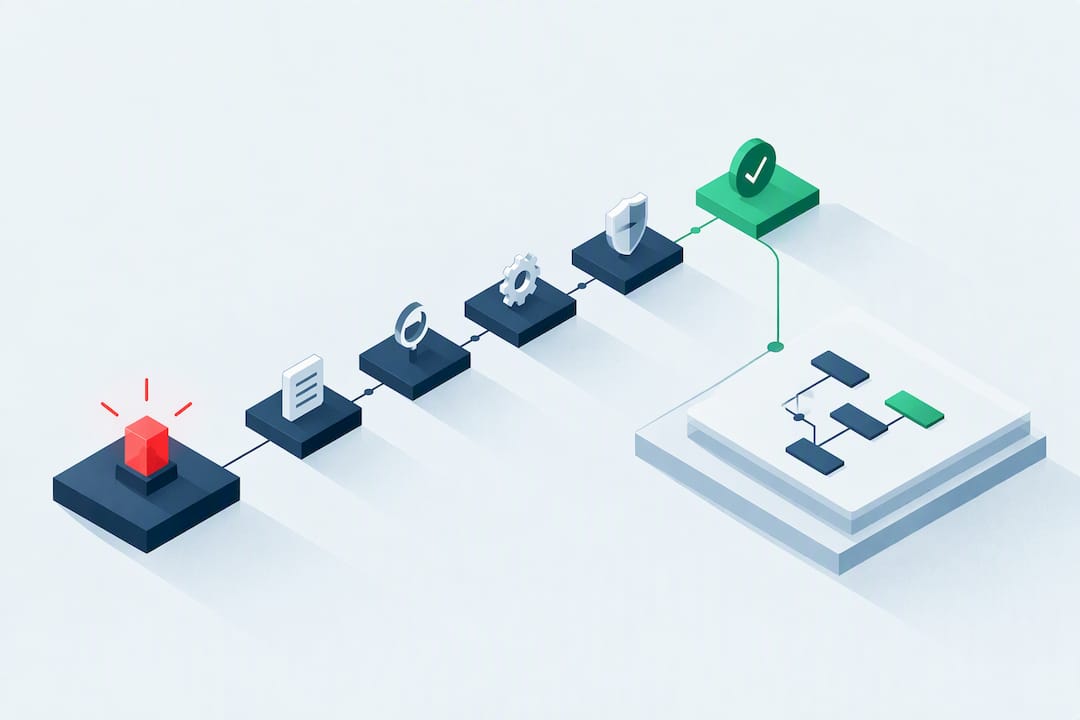
GDPR does not generally require personal data to be stored inside the EU or EEA. Chapter V governs transfers, not location by default, so choosing EU data residency is a contractual and risk-management decision rather than a strict legal mandate. Residency removes the need for transfer mechanisms when data never leaves the EEA, but it does not guarantee immunity from foreign legal reach. When in doubt, map your transfers first and require EU residency where contracts, sector rules or genuine risk reduction call for it.
TL;DR:
- Before relying on SCCs or binding corporate rules, map each transfer, assess destination country laws, and add effective safeguards or stop the transfer.
- Prioritize residency for health, biometric, and criminal records with long retention periods, especially when sector rules or customer contracts require it.
- Verify backups, metadata, support access, subprocessors, parent company jurisdiction, and encryption key control; a primary EU region alone leaves important exposure unchecked.
- Require dated attestations with a renewal schedule and retain region configurations, access logs, replication settings, and disaster recovery results for recurring audits.
Table of Contents
- Data residency vs data sovereignty vs data localization: what each term actually means
- How GDPR Chapter V governs cross-border data transfers
- Schrems II and the transfer impact assessment every exporter needs
- When EU residency should be a hard requirement in procurement
- Vendor checklist: six questions to ask before accepting an EU residency claim
- Turning residency requirements into audit-ready evidence
- What credible EU-residency evidence actually looks like
- The trade-off compliance teams rarely say out loud
- Monitoring with EU residency built into the architecture
- FAQ
- Sources
Data residency vs data sovereignty vs data localization: what each term actually means
These three terms get used interchangeably in procurement documents, and that habit causes real mistakes. Each describes a different thing, and a vendor can satisfy one while failing another.
- Data residency refers to the physical or geographic location where data is stored and processed, such as a cloud provider’s EU Central region.
- Data sovereignty refers to which country’s laws can reach that data, regardless of where it physically sits; a US-headquartered provider storing data in the EU can still face US legal demands under laws like the CLOUD Act.
- Data localization refers to a legal requirement, imposed by a specific country or sector regulator, that certain data must stay within that territory; this appears most often in financial services, health records and government contracts rather than as a general GDPR rule.
Confusing these terms leads to two common procurement mistakes. The first is assuming an “EU region” checkbox satisfies every legal obligation, when the real exposure often sits with parent-company jurisdiction or subprocessor access. The second is over-specifying localization language in a contract when what the business actually needs is a documented, auditable transfer mechanism. Getting the vocabulary right at the procurement stage saves a renegotiation later, when a security questionnaire exposes the gap between what was asked for and what was actually bought.
How GDPR Chapter V governs cross-border data transfers
Article 44 sets the baseline principle: any transfer of personal data outside the EEA must maintain the level of protection GDPR guarantees inside it. Chapter V is the mechanism for honoring that principle when data crosses a border, and GDPR’s transfer regime permits lawful transfers using adequacy decisions and appropriate safeguards rather than imposing a blanket EU storage requirement.
Three legal routes apply, in practice:
- Adequacy decisions (Article 45): the European Commission has determined that certain countries offer an essentially equivalent level of data protection, which allows transfers there without further safeguards.
- Article 46 safeguards: standard contractual clauses (SCCs) and binding corporate rules (BCRs) are the main tools when no adequacy decision exists; the European Commission adopted modernized SCCs on June 4, 2021, and they remain a primary mechanism for transfers today.
- Article 49 derogations: narrow exceptions, such as explicit consent or necessity for contract performance, meant for occasional transfers rather than as a substitute for a proper transfer framework.
SCCs adopted in 2021 remain the most widely used Article 46 tool for transfers to non-EEA countries, but they require a case-by-case check of the destination country’s laws before an exporter can rely on them. That case-by-case check is the part most teams skip, and it is exactly what regulators ask about during an audit.
None of these mechanisms are a one-time signature. Adequacy decisions are reviewed periodically, SCCs require monitoring of the receiving country’s legal environment, and BCRs need ongoing internal enforcement. Documentation matters as much as the mechanism itself: a signed SCC with no record of the underlying risk assessment offers little protection if a regulator asks how you concluded the transfer was safe.
Schrems II and the transfer impact assessment every exporter needs
The 2020 Schrems II ruling (CJEU, Case C-311/18) changed how SCCs and other Article 46 tools function in practice. The court’s core holding was that the level of data protection guaranteed in the EU must travel with the data, no matter which contractual tool authorizes the transfer. A signed SCC is not, by itself, sufficient if the destination country’s laws allow government access that undermines the protections the clauses promise.
That ruling is why the EDPB’s recommendations on supplementary measures describe a transfer impact assessment (TIA) as a required step, not an optional one, before relying on SCCs or BCRs. A TIA typically involves:
- Identifying exactly what personal data moves, to which country and through which vendor or subprocessor.
- Assessing the destination country’s laws, particularly around government access to data held by private companies.
- Evaluating whether the chosen transfer tool, on its own, provides effective protection against that risk.
- Determining whether supplementary measures (such as strong encryption with keys held outside the destination country, pseudonymization or contractual access-notification clauses) close the gap.
The EDPB recommends exporters work through a defined sequence: know your transfers, verify the transfer tool, perform the impact assessment, and adopt supplementary measures or suspend the transfer if no effective measures exist. That last step is the one organizations find hardest to act on: if the assessment shows the destination country’s surveillance laws cannot be offset by technical or contractual measures, the transfer has to stop, regardless of commercial pressure to keep it running.
When EU residency should be a hard requirement in procurement
EU residency is worth insisting on in specific situations rather than as a default checkbox on every vendor questionnaire.
- Eliminating transfer-mechanism overhead. Keeping data inside the EEA removes the need for SCCs, TIAs and ongoing monitoring of a third country’s laws for that dataset.
- Sector or national rules apply. Financial services, health data and public-sector contracts frequently carry explicit localization or residency clauses beyond baseline GDPR.
- A customer or procurement contract demands it. Enterprise buyers increasingly write EU residency into their own vendor contracts as a risk-transfer clause, independent of what GDPR itself requires.
- Latency or operational reasons favor it. EU-based customers often see faster response times from EU-hosted infrastructure, which is a performance argument more than a legal one.
Prioritize datasets by sensitivity and lifespan: special-category data (health, biometric, criminal records) and long-retention records deserve residency-first treatment before you spend the same scrutiny on short-lived operational logs. A quick procurement rule: if a dataset would trigger a TIA under Schrems II guidance, ask whether EU residency removes that burden entirely before accepting a non-EEA vendor with supplementary measures bolted on.
Vendor checklist: six questions to ask before accepting an EU residency claim
A vendor’s marketing page saying “EU data residency” is a starting point for due diligence, not the end of it. Work through these questions in order, and request documentary evidence for each one rather than taking a verbal confirmation.
- Where exactly is data stored and processed, including backup and disaster-recovery regions, not just the primary production environment.
- Who owns the vendor, and in which jurisdiction is the parent company incorporated, since a US-owned company storing data in an EU region can still face US legal demands under extraterritorial laws.
- Where does operational access happen, meaning support staff, engineers and any subprocessors listed in the vendor’s subprocessor disclosure.
- Who holds the encryption keys, and are they managed through an EU-based hardware security module or key-management service.
- Can you export your data on demand, and does the vendor document the full scope of what a migration would include.
- What attestation evidence does the vendor provide, such as configuration exports, region tags or periodic re-attestations rather than a one-time claim.
Pro Tip: Ask for a signed attestation with a renewal date, not a static compliance page. A claim without a re-verification cadence tells you nothing about whether it still holds true next quarter.
Residency settings in many platforms apply only to new data going forward, and metadata, account records, backups or support tickets frequently sit outside the selected region even when the primary dataset is EU-resident. Pressing on these specific, less-visible categories is where most vendor assessments find the real gap.
Turning residency requirements into audit-ready evidence
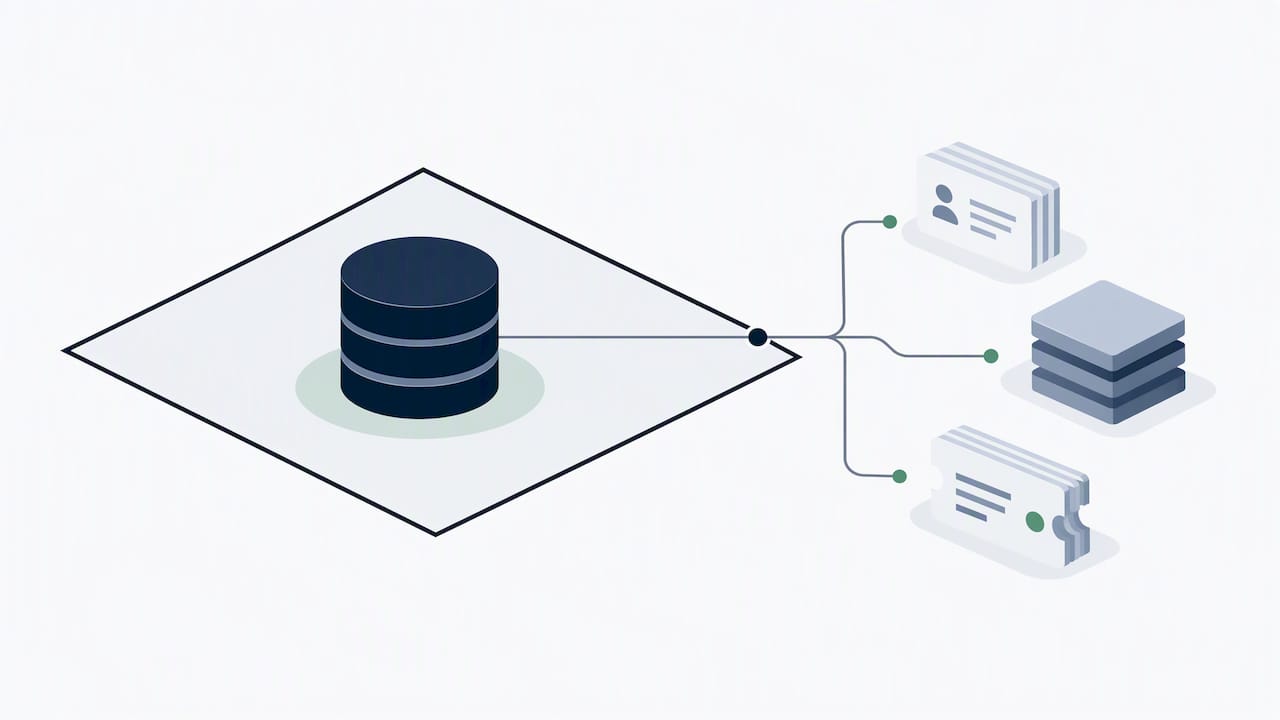
Legal and procurement requirements only matter if engineering and contract teams can translate them into controls someone can verify later. Start with a data flow map: document every system that touches personal data, where it processes and stores that data, and which subprocessors are involved. That map feeds directly into a DPIA or TIA output and becomes the reference document when a customer or regulator asks for evidence.
From there, the controls split into engineering and contractual tracks:
- Engineering controls: enforce region selection and replication policies at the cloud-organization level, so a developer cannot accidentally spin up a resource outside the approved region; configure backups, logging and telemetry pipelines to respect the same residency boundary as production data.
- Contractual controls: bind the residency commitment into the data processing agreement (DPA) and master service agreement (MSA), require advance notification of subprocessor changes, and secure a right-to-audit clause rather than relying on the vendor’s self-reported compliance page.
- Evidence collection: gather configuration exports, access logs, replication settings and disaster-recovery test results on a recurring schedule, not only at initial vendor onboarding.
- DR testing with jurisdiction in mind: when you run a disaster-recovery drill, confirm the failover region is also EU-based if residency is a contractual requirement, since a DR plan that quietly fails over to a US region defeats the whole control.
None of this is a one-time project. Subprocessors change, cloud providers add regions, and contracts get renewed with different terms. Treat residency evidence the same way you treat any other control: something you re-verify on a cadence, with a named owner and a date on the last check.
What credible EU-residency evidence actually looks like
A vendor’s claim is only as good as the artifacts behind it. Acceptable evidence includes tenant-level region tags visible in the admin console, replication configuration showing data stays within the stated region, subprocessor attestations naming where each subprocessor operates, and a written statement of who holds encryption keys and where.
- Check metadata and logs separately from primary data, since these frequently fall outside a residency commitment even when the main dataset does not.
- Verify support and engineering access locations, not just where data sits at rest, since a support team outside the EU accessing EU-stored data is still an access path worth documenting.
- Ask for a re-attestation cadence, such as quarterly or annual confirmation, rather than accepting a claim made once at signup.
We store every monitoring result, incident record and check history on a control plane and database in the EU, which is the kind of specific, verifiable claim worth documenting in a vendor file rather than taking at face value from any provider, including us.
The trade-off compliance teams rarely say out loud
EU residency buys procurement simplicity. It removes the TIA burden for the data that stays inside the EEA, and it gives your legal team a shorter answer when a customer’s security questionnaire asks where data lives. What it does not buy is automatic protection from foreign legal reach, and treating a region selector as the whole compliance program is where I see teams get caught out during an actual audit.
Prioritize the data that would hurt the most if a transfer assessment failed: special-category records, anything with a long retention period, anything tied to a regulated sector. Everything else can carry a lighter, risk-proportionate process. And when you write vendor contracts, ask for the specific, falsifiable claim (an exact region, a key-management detail, a subprocessor list) rather than the word “compliant,” which no vendor’s lawyer will ever let mean anything precise.
— Aaditya Parashar
Monitoring with EU residency built into the architecture
For teams that need uptime monitoring without adding a new cross-border transfer to the data flow map, we store monitoring results, incident records and check history on a control plane and database in the EU. We confirm failures from a second region on some plans before opening an incident, reducing false alarms for on-call engineers without changing where that data lives.
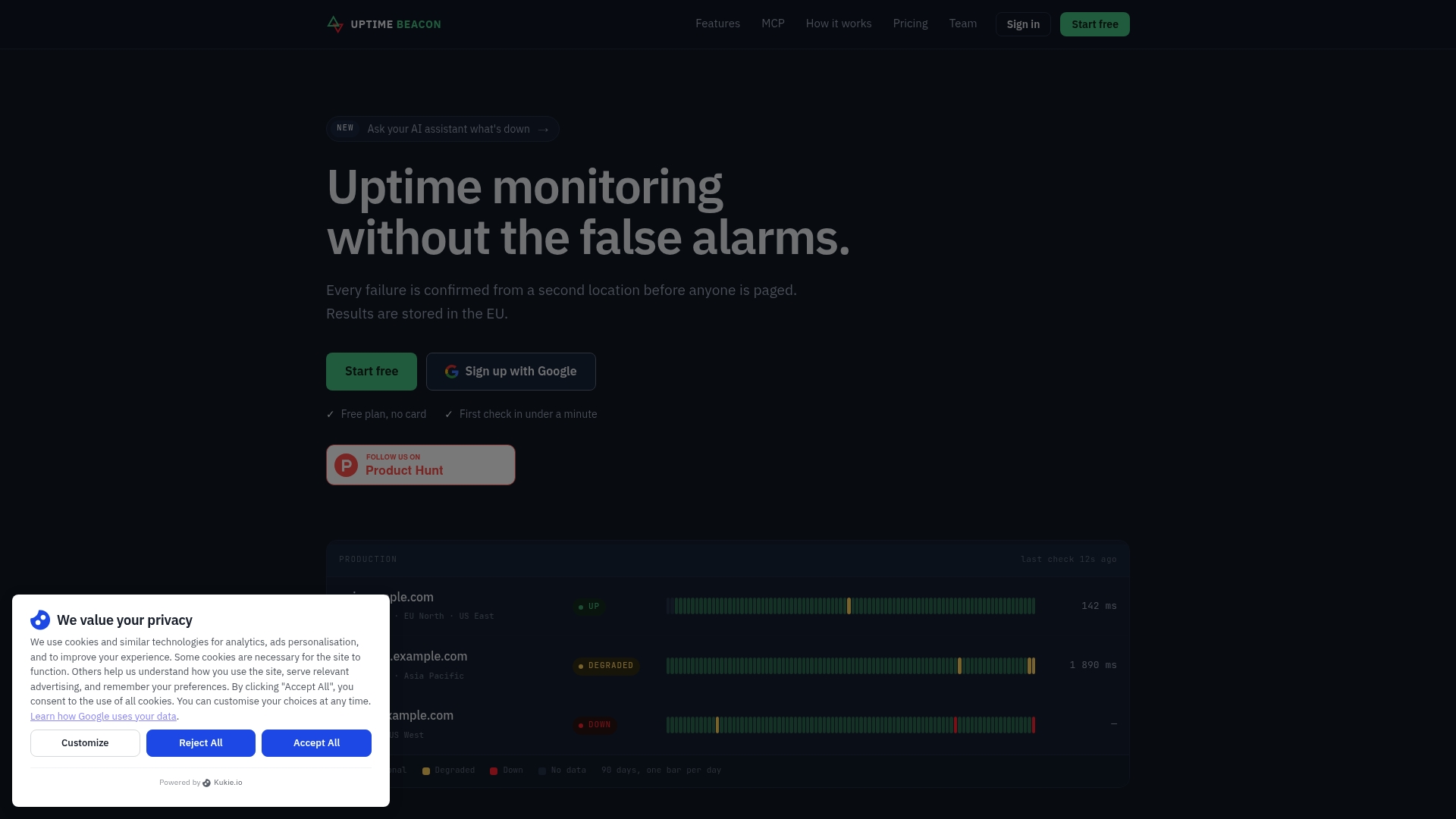
We also run an MCP server on every plan, including the free plan, so Claude, ChatGPT, Cursor or VS Code can read monitors and incidents and diagnose a failing check region by region, with nothing deletable through that interface. The free plan offers monitors checked periodically from EU Central, one alert channel and one status page, with no card required. If EU-resident monitoring data is one of the boxes on your vendor checklist, see current plans and features to check availability for your team.
This article is general information, not a substitute for advice from a qualified lawyer. Consult a qualified legal professional about your own circumstances before acting on anything here.
FAQ
Does GDPR require personal data to stay in the EU or EEA?
No. GDPR’s Chapter V regulates how data can lawfully leave the EEA rather than mandating that it stay there, permitting transfers through adequacy decisions, SCCs or BCRs. EU residency is a choice that can simplify compliance, not a baseline legal requirement.
What is the difference between data residency and data sovereignty?
Data residency describes the physical location where data is stored, while data sovereignty describes which country’s laws can reach it regardless of location. A provider can store data in the EU while remaining subject to a foreign government’s legal demands if its parent company is incorporated elsewhere.
What did the Schrems II ruling change for data transfers?
The CJEU’s Schrems II decision established that the level of data protection guaranteed in the EU must travel with the data, so a signed SCC alone is not automatically sufficient. The EDPB’s guidance requires exporters to perform a transfer impact assessment and add supplementary measures, or suspend the transfer, when third-country laws undermine the chosen safeguard.
What questions should I ask a vendor claiming EU data residency?
Ask exactly where data and backups are stored, who owns the company and in which jurisdiction, where support and engineering staff access data from, and who controls the encryption keys. Request documented evidence such as region tags, subprocessor lists and a re-attestation schedule rather than a one-time marketing claim.
Does Uptime Beacon store monitoring data in the EU?
Yes, monitoring results, incidents and check history are stored on a control plane and database located in the EU. Monitoring checks run from multiple regions to confirm failures before raising an alert.
Sources
- European Commission: standard contractual clauses (SCCs) for international transfers
- EDPB guidance: international data transfers (overview)